

Wall Oven Repair usually in one visit
Single and double wall ovens that won’t heat, won’t turn on, stay locked after self-clean or show an error, repaired across Metro Vancouver and the Fraser Valley, 8am to 8pm daily.
Request a service callCall 604-900-2105Common wall oven problems, and how we fix them
An oven that won’t heat, a wrong temperature, or a dead display? These are the faults we see most. Tap a card to see how we fix it.
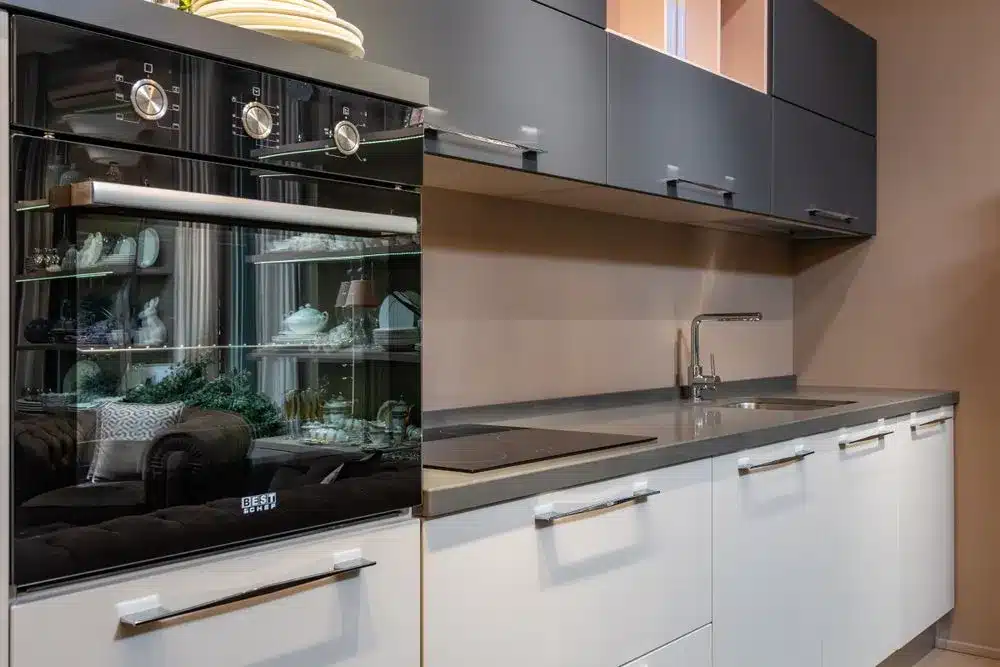
Turns on but won’t heat
Usually a burned-out bake or broil element, often visibly blistered or split.
On an electric wall oven this usually means an element. Pull the racks out and look directly at the bake element in the floor of the cavity and the broil element in the roof: a failed element often shows a visible blister, a split, or a bright scorched spot where it burned through. Run the oven for a minute and watch whether the element glows evenly along its whole length.
If both elements look sound and neither glows, the fault is upstream — commonly a relay on the control board that is no longer closing, or a tripped thermal fuse. An oven that heats but takes far longer than it used to, or never quite reaches temperature, is more often a failing element drawing less current than it should, or a temperature sensor reading high and cutting the heat early. Worth noting: a wall oven running on only one of its two 240-volt legs will heat weakly and slowly, which is an electrical supply issue rather than an oven fault.
Won’t turn on
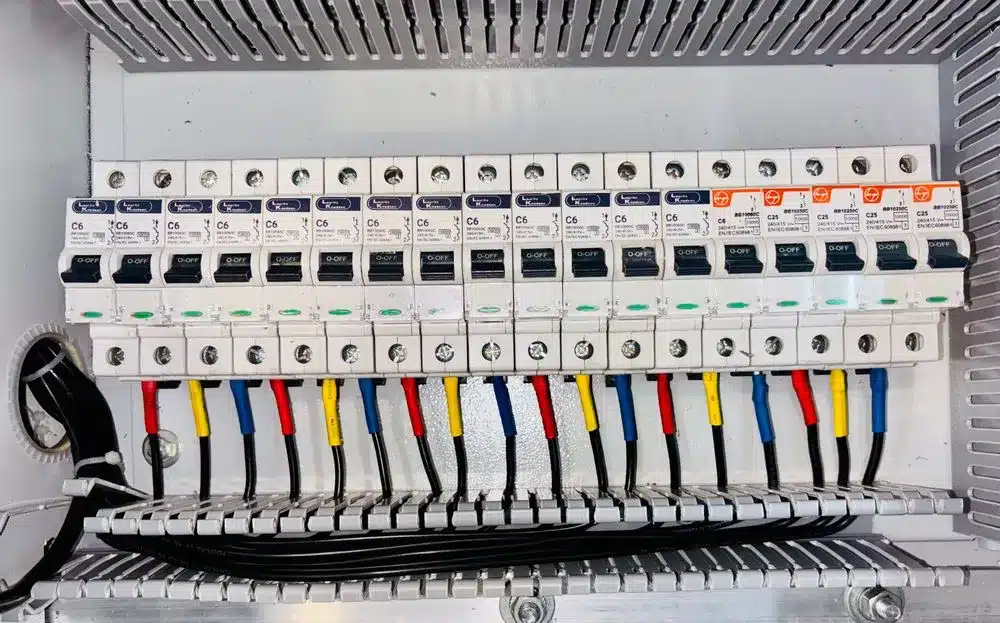
Check the breaker first. If that’s fine, it’s a thermal fuse or the controls.
If there ever was a time to call an appliance repair company, it’s when your machine isn’t turning on at all. If your oven isn’t turning on, there’s a possibility that a simple tripped circuit is to blame. Check your circuit breaker to see if the corresponding breaker has been flipped and reset it if needed.
If everything looks good at the fuse box, and the appliance seems to be receiving power, but your oven still won’t switch on, it means an issue with the oven itself. There are a number of things that could go wrong to cause this problem, including:
- A broken electrical wire
- A damaged or faulty oven control board
- A faulty heat element
- The oven is receiving the wrong amount of power
Testing for these issues not only requires special tools for measuring current and repairing electrical connections, but also intimate knowledge of how these machines work. There’s a real risk of electrical shock when attempting any DIY solutions relating to this problem, so we recommend calling our professional technicians to take a look at it.
Temperature is wrong
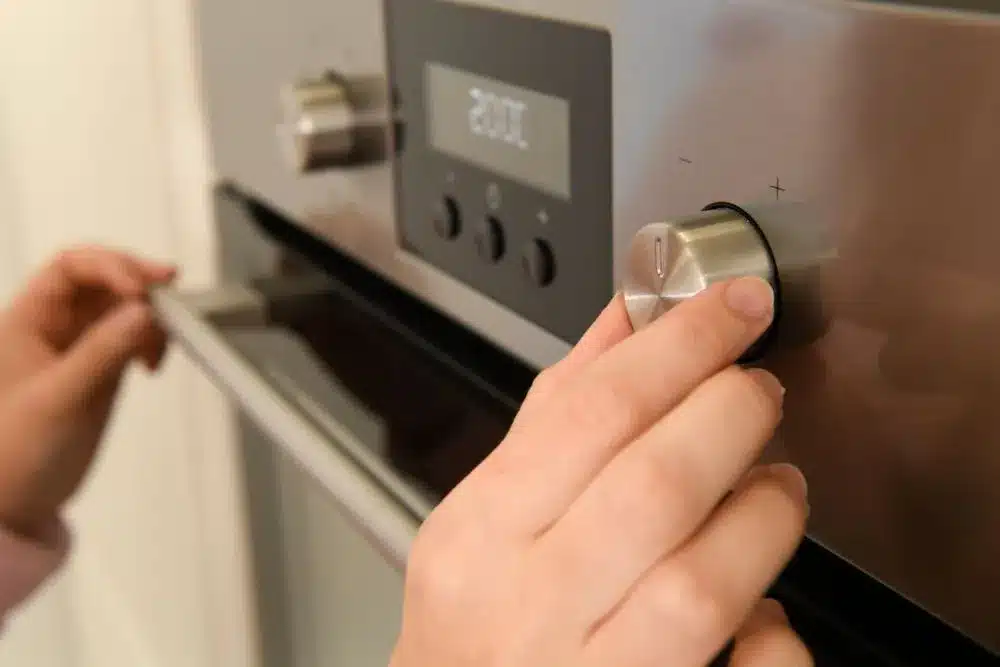
Calibration, the temperature sensor or the thermostat. We test and fix.
If the oven is hotter or colder than what the electronic display says, or your food is coming out burnt after a regular amount of cooking time, you may need to recalibrate the temperature controls. There are often instructions on how to do this in your appliance manual, allowing you to reconfigure the unit’s controls yourself. If this still doesn’t fix the issue, your thermal fuse or internal thermostat may be broken. This is a fairly simple repair, but the initial diagnosis can be challenging, and should be left to a professional appliance repair technician.
Before assuming a fault, test it properly: put an oven thermometer on the centre rack, set the oven to 175°C, and let it run for at least twenty minutes so the cycling settles. Ovens swing above and below the set point by design, so a single reading tells you very little. A consistent gap of more than about 15°C is the point at which it is worth acting.
Most modern wall ovens use a temperature sensor — a thin probe in the cavity wall — rather than a mechanical thermostat, and it is a straightforward part to test and replace. Many models also allow the calibration to be adjusted in the control settings, which can correct a small persistent offset without any parts at all. If the oven is wildly out, or heats without ever reaching the set point, the element or the control relay is the more likely cause.
Self-clean not working
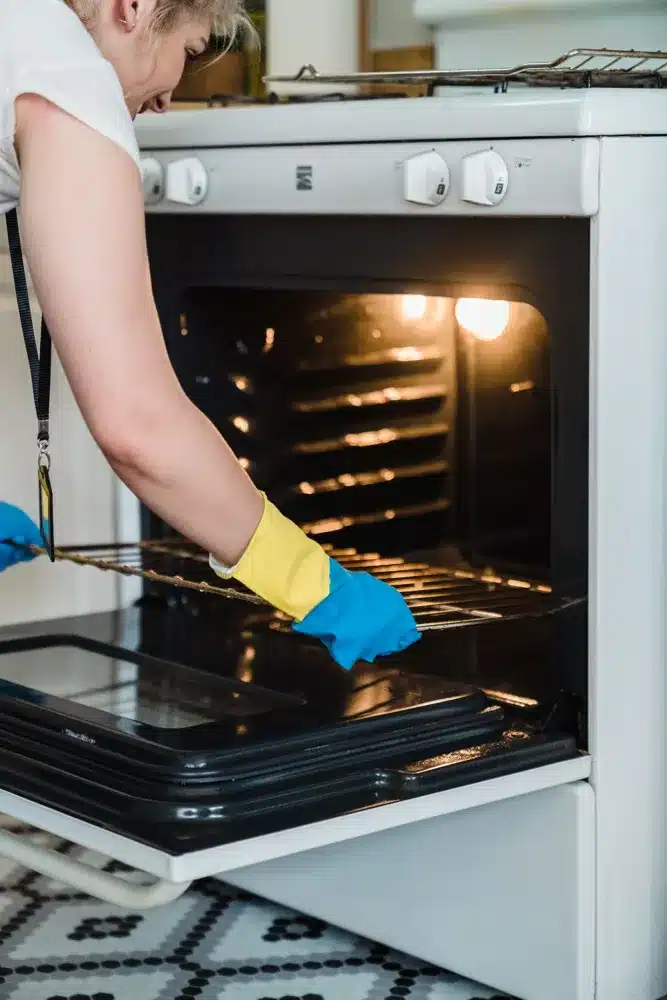
A door that isn’t latching, or a failed lock. We check both.
Arguably one of the handiest inventions since the oven itself, the self-clean feature has graciously saved us from one of the most difficult kitchen chores. When the alternative is scrubbing burnt grease on your hands and knees, there’s good reason to make sure your self-clean feature is working properly. If the cleaning cycle never begins after hitting the button, it could mean the door is simply not latching closed properly. If this isn’t the problem, then it points, again, to an electrical issue. A broken electrical connection, temperature control thermostat, control board, or thermal fuse could all be to blame for your oven not self-cleaning.
There is a detail worth knowing before you run self-clean again: the cycle drives the cavity up to around 500°C, and that heat is the single most common cause of wall oven failures that show up immediately afterwards. A blown thermal fuse, a dead control board or a door that will not unlock are all classic post-self-clean faults. If your oven stopped working right after a cleaning cycle, that is almost certainly the cause rather than a coincidence.
If the cycle will not start at all, the usual culprits are the door lock motor or switch, which must confirm the door is latched before the oven will proceed, or the control board itself. Given the risk the cycle carries for older ovens, wiping the cavity down by hand is often the better choice once a machine is past about ten years old.
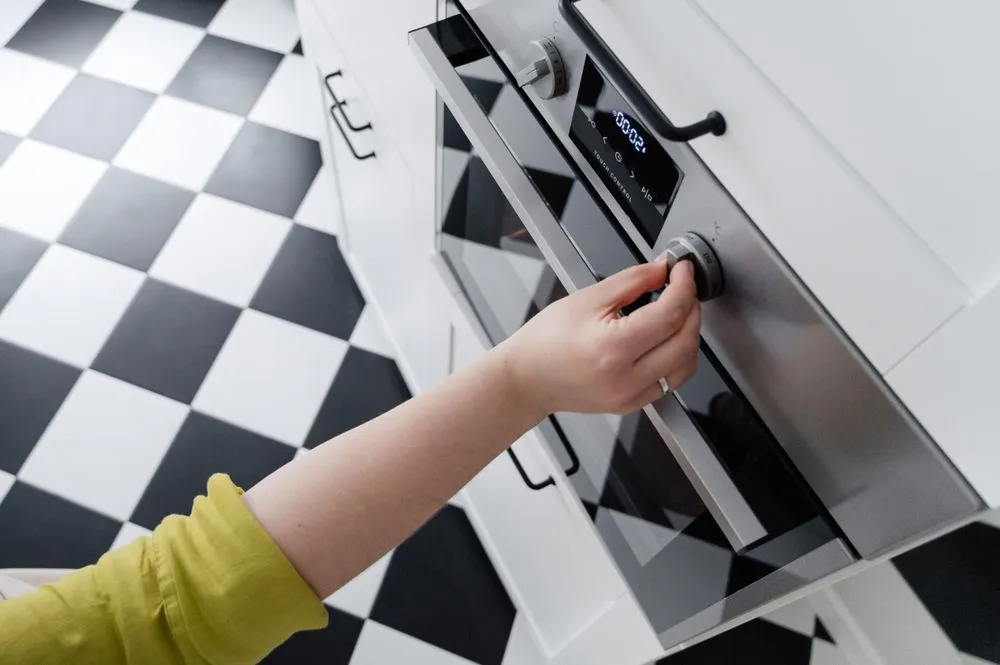
Door won’t open or close
A physical fault in the latch mechanism. We repair or replace it.
One of the more straightforward oven repairs, an oven door that’s stuck or won’t latch closed is a physical issue with the latching mechanism. Whether your door isn’t opening, or refuses to close, the severity of this problem speaks for itself.
For doors stuck closed, you may need to shut off the power to the unit, and manually open the door latch mechanism. Sometimes, simply doing this one time will fix the issue, at least for a while, but if the problem persists you will likely have to replace the hardware. Likewise, a door that doesn’t close properly points to worn out door hinges, which will typically need to be replaced as well.
Most door faults come down to the hinges or the springs behind them. Oven doors are heavy, and the hinge arms take that weight every time the door swings; once a spring stretches or a hinge bends, the door sits slightly proud, will not pull flush against the seal, or drops open rather than holding position. A door that no longer seals is not only annoying, it lets heat escape and makes the oven run longer and less accurately.
Check the door gasket at the same time. It is a rope-style seal around the cavity opening, and when it hardens, flattens or tears, the symptoms look like a hinge problem. If the door is locked shut and will not release, do not force it — on most wall ovens that means the lock motor is mid-travel or has failed, and levering the door turns an inexpensive part into a replacement door.
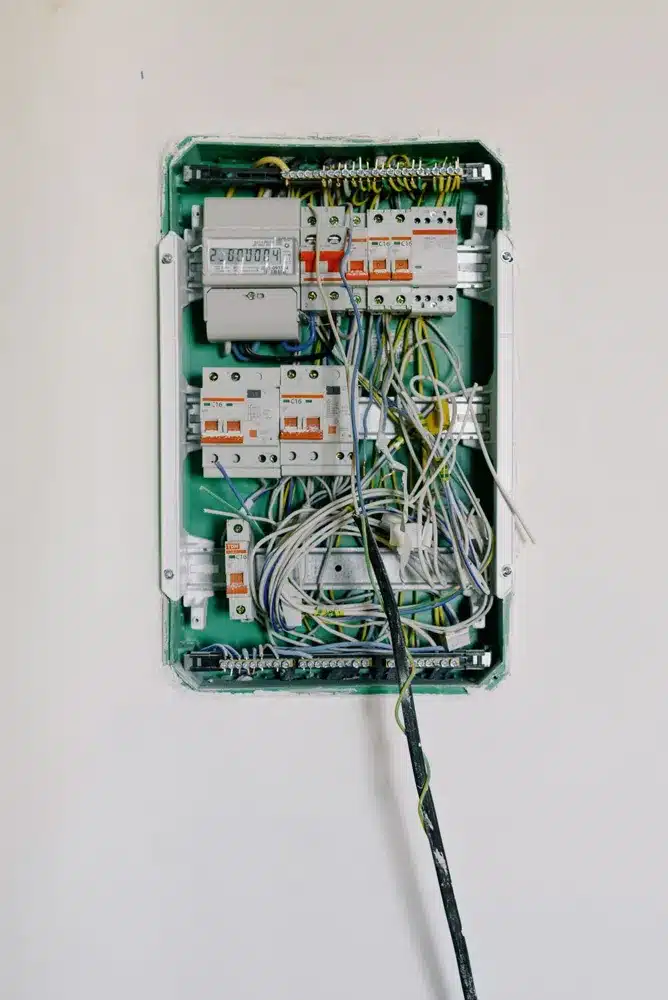
Trips the breaker
Stop using the oven. A tripping breaker usually means a shorted element.
This one deserves respect. A breaker that trips when the oven is switched on, or part-way into preheat, almost always means a short — most often an element that has burned through and is now arcing against the cavity wall. You can sometimes see the damage as a pitted or blackened spot on the element itself.
Do not keep resetting the breaker to get one more meal out of it. The breaker is doing exactly its job, and repeated arcing damages wiring and the terminal block behind the oven, which turns a single-part repair into a much larger one. Other causes include moisture in the wiring after a self-clean cycle, a degraded terminal block where the supply cable lands, and a failed control relay welded closed. All of them are 240-volt work and none of them is a reasonable DIY job.
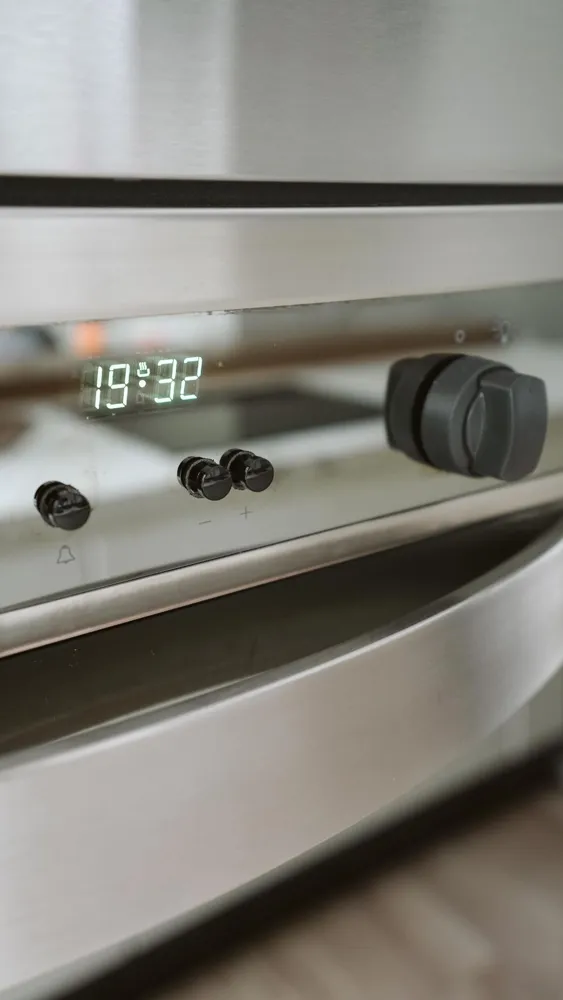
Display or touch panel unresponsive
Try the control lock and a one-minute power cycle first. If it stays dead, it’s the control board.
Start with the two things that cost nothing. Many wall ovens have a control lock, often held for three to five seconds on a padlock or Lock key, and it is easy to engage by accident while cleaning the panel. After that, cut power at the breaker for a full minute and restore it — a genuine power cycle clears a surprising number of frozen control boards, and switching the oven off at the panel is not the same thing.
If buttons still do nothing, or only some respond, the membrane switch behind the glass has usually failed; it wears with use and with heat. A display that is blank, flickering or showing a fault code points at the control board instead. As with the other faults on this page, if the panel died in the hours after a self-clean cycle, that heat is the likeliest cause and the board or thermal fuse is where we would look first.
Oven light not working
A burnt-out bulb is the simple case; otherwise a switch or a wiring connection.
Sometimes as simple as a burnt-out bulb, a broken oven light is a simple but frustrating problem you’re likely to experience at least once while owning your appliance. If replacing the bulb doesn’t stop the issue, you’re probably looking at a faulty electrical connection, control, or switch. Again, due to the high risk of shock when fiddling with these high-voltage components, we can’t recommend consulting a professional enough.
If you are changing the bulb yourself, cut the power at the breaker first rather than relying on the oven being switched off, let the cavity cool completely, and use a glove or dry cloth. Oven bulbs are appliance-rated for high temperature — a standard household bulb will fail quickly and can shatter in the cavity. The glass cover usually unscrews anticlockwise, and it can be stiff if it has not been removed in years.
If a fresh bulb does nothing, the fault is in the socket, the door switch that tells the oven the door is open, or the control board. A light that stays on permanently points at the same door switch from the other direction. Neither is urgent, but both are worth rolling into another repair rather than booking a visit on their own.
More about wall oven problems
A working electric wall oven is a huge help in keeping you and your family fed. For many, an oven is the part of our routine we rely on when we have other business to attend to, letting dinner cook itself while we finish up our days. Like all appliances however, ovens require regular maintenance to remain in good working order. Whether it’s a simple Wednesday night supper, or an extravagant weekend dinner party, one thing is obvious: you don’t have time to deal with oven issues.
In our years serving the Langley BC area, Starfix has successfully repaired countless electric wall ovens. This makes us the obvious choice when you need your appliance repaired promptly, particularly for something as important to your day-to-day routine as an oven.
Read on to learn about a few of the most common wall oven issues and their potential causes, as well as how we tackle these issues in order to get you back up and running as soon as possible.
Wall oven repair near you
Appliance repair across Metro Vancouver and the Fraser Valley — from West Vancouver to Agassiz.

Vancouver, North Shore & Richmond
- Vancouver
- West Vancouver
- North Vancouver
- Kitsilano
- Dunbar
- Gastown
- Yaletown
- Richmond
Burnaby, Tri-Cities & Ridge Meadows
Delta, Surrey & White Rock
- Delta
- Tsawwassen
- White Rock
- South Surrey
- Surrey
- Guildford
- Fleetwood
- Cloverdale
Langley & the Fraser Valley
- Langley
- Mission
- Abbotsford
- Chilliwack
- Cultus Lake
- Rosedale
- Agassiz
- Harrison Mills
Brands we repair
Every major brand sold in Canada. Pick yours for the faults we see most often.


