
A dishwasher not draining is usually blocked, not broken. Food and grease clog the filter, the drain hose or the garburator connection, so water cannot leave the tub. In most Surrey, Langley and Burnaby homes, you can find the blockage with a few safe checks in about 20 minutes.
This guide gives you those checks in the right order, with safety steps first. It also shows which signs point to a failed drain pump or control fault, which belong to a technician. Starfix repairs dishwashers across the Lower Mainland and Fraser Valley, and standing water is one of the calls we see most.
Why is my dishwasher not draining?
A dishwasher that will not drain has a restriction or a part that cannot move water out. The most common cause is a clogged filter or drain basket. Next come a kinked or blocked drain hose, a garburator knockout plug that was never removed, a failed drain pump, or a stuck drain valve.
Think of it like a sink with a hair clog. The drain pump pushes water out, but if the path is blocked, the water has nowhere to go. Clearing the path fixes most cases.
The usual suspects
- A clogged filter packed with food, labels, glass bits or grease.
- A blocked drain hose or a hose with a sharp kink behind the dishwasher.
- A garburator connection where the knockout plug is still in place, or the garburator is full of waste.
- A failed drain pump that hums, buzzes or makes no sound when it should run.
- A control or sensor fault that never tells the pump to start.
Safety first: before you check anything
Turn off the dishwasher, then switch off its breaker at the panel, or unplug it if you can reach the cord. Standing water and electricity do not mix. Wear gloves, because the water may hold broken glass or sharp food scraps. Do not open any panel that holds wiring, and do not run the dishwasher to test while you work inside it.
How do I fix a dishwasher that won’t drain? 6 safe checks
To fix a dishwasher that will not drain, turn off the power, bail out the standing water, then clean the filter, check the drain hose for kinks, and clear the garburator connection or air gap. Run a short rinse cycle to test. These six steps clear most clogs.
- Cut the power. Switch off the breaker or unplug the unit before you reach inside.
- Remove the water. Use a cup and a small towel to scoop out the standing water from the tub. This lets you see the filter and the drain opening.
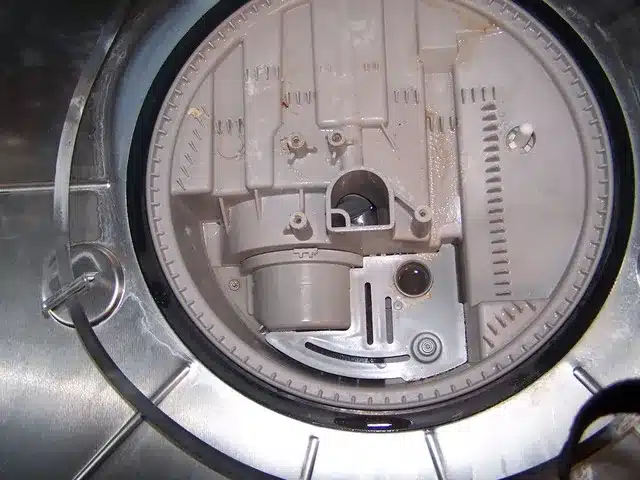
- Clean the filter and drain basket. Pull out the lower rack, twist out the cylinder filter and lift the flat mesh screen. Rinse both under warm water and scrub them with a soft brush. Remove any glass, labels or bones around the drain opening.
- Check the drain hose. Slide the dishwasher out only if it is easy to move and you can do so without straining the water line. Look for a sharp kink or a crushed section. Straighten it, and make sure it forms a loop up high under the counter, not a sag on the floor.
- Check the garburator or air gap. If the dishwasher drains through your garburator, run the garburator clear with the water on. If it was recently installed, confirm the knockout plug was removed from the inlet. If you have an air gap on the sink, lift the cap and clear the debris inside.
- Test with a short cycle. Restore power, run a rinse-only cycle and watch for standing water at the end. A healthy dishwasher leaves only a thin film on the tub floor.
If it drains, run a hot empty cycle with a cup of white vinegar on the top rack. This helps loosen grease that is left in the hose and pump housing.
What if the dishwasher hums but still won’t drain?
A hum without water leaving usually means the drain pump is trying to run but is jammed, or its impeller is worn. Broken glass or a fruit pit can lodge in the pump chamber, and a failed pump motor makes a similar sound.
Cleaning the filter sometimes frees a jam you can see. If the pump stays silent or stays noisy afterward, stop. Removing the pump involves the electrical connections and the water seals, which is a technician job.
Why does my dishwasher drain slowly or smell?
Slow draining is usually a partial clog. Grease and soap scum build up in the hose and filter, and the water trickles out. The smell comes from the same buildup, plus food trapped under the filter. A thorough filter clean and a vinegar cycle often fix both. If the water drains back from the sink, the clog is in the household drain line, which a plumber should check.
When should I call a technician?
Call a technician when the checks do not clear the water, or when you see any of these signs. Pushing on risks water damage, an electrical hazard or a bigger bill.
- Water is still standing after you clean the filter, check the hose and run a test cycle.
- The drain pump hums, buzzes or stays silent when the cycle should be draining.
- Water leaks onto the floor from the door, the base or the hose connection.
- The control panel shows a drain error code or the cycle never starts.
- You smell burning, see scorched wiring or the breaker trips.
Starfix handles dishwasher repair across Metro Vancouver and the Fraser Valley. Our visit follows a simple order: we inspect the drain path and pump, give you a quote, and begin the repair only after you approve it. To see how a visit works, read how our dishwasher inspection and quote work. For other common faults, our guide to repairing your dishwasher at home is a good next read.
Is a dishwasher that won’t drain worth repairing?
Clogs, kinked hoses, loose garburator connections and worn drain pumps are usually worth repairing. A tub that leaks, a rusted base, or a unit that has failed several parts in a short time is a different story. A technician can tell you which side of that line you are on after an inspection. Before you buy a new unit, also check whether your model has a safety recall posted by Health Canada.
How can I stop my dishwasher from clogging again?
Scrape plates, but do not pre-rinse them clean, because modern detergents work best with some food present. Clean the filter once a month, and run a hot cycle with vinegar every few months. Keep bones, fruit pits, labels and broken glass out of the tub. If you use a garburator, run it before you start the dishwasher.
Where does Starfix repair dishwashers?
We serve the whole Lower Mainland and Fraser Valley, seven days a week from 8am to 8pm. That includes Surrey, Langley, Burnaby, Richmond and Coquitlam, plus many other cities nearby. Same-day service is available in most areas.
Frequently asked questions
Why is there standing water in my dishwasher after a cycle?
The most common cause is a clogged filter or drain hose. Food, grease or glass blocks the path, and the water cannot leave the tub. Clean the filter first, then check the hose and the garburator connection.
Can I run the dishwasher with water in the bottom?
It is best not to. Standing water means the drain path is blocked, so the next cycle can overflow or leak. Scoop the water out, clear the clog, then run a short test cycle.
Is it safe to use drain cleaner in a dishwasher?
No. Chemical drain cleaners can damage rubber seals, hoses and the pump, and they can splash back on your skin. Use warm water, a soft brush and a cup of white vinegar instead.
How do I know if the drain pump has failed?
A failed drain pump often hums, buzzes or stays silent while water stays in the tub, even after you clean the filter. A technician can test the pump and the control that drives it.
Does a new garburator cause dishwasher drain problems?
It can. New garburators have a knockout plug in the dishwasher inlet. If nobody removes it, the dishwasher cannot drain into the unit. A technician or plumber can remove it safely.
Book a dishwasher repair with Starfix
If your dishwasher is still not draining after these checks, let us take a look. Call 604-900-2105 or book online at Starfix.ca. Have the brand, model number and the symptom ready, and we will get you booked.


